Active soil depressurization
Uses a pipe and fan to draw gas from beneath the foundation and safely exhaust it outside. Often the preferred solution for homes with a slab or basement.

A high test result doesn't mean you're out of options. Effective radon reduction systems help prevent radon from entering your home. The right solution—and its cost—depend on your property.
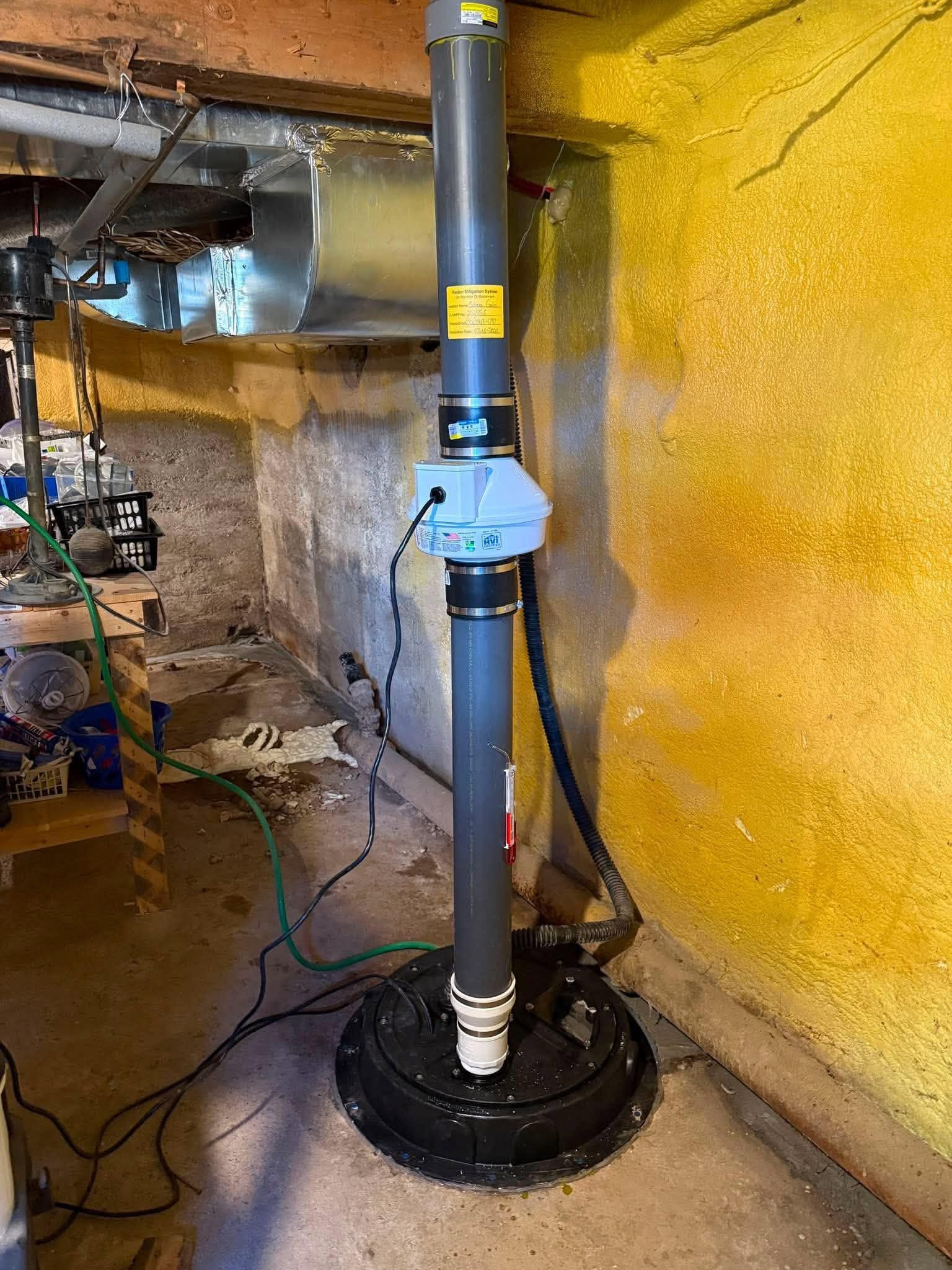
Health Canada recommends corrective action when your representative long-term radon average reaches or exceeds 200 Bq/m³.
Ideally, mitigation should be completed within one year, and sooner when the measured level is especially high. The goal is to lower radon as much as reasonably practical—not just reach a number and stop.
Not sure about your test result? Start hereFor elevated long-term results, contact a C-NRPP-certified radon mitigation professional to discuss the most suitable reduction method.
One of the most effective approaches is active soil depressurization (ASD), often called sub-slab depressurization. It helps capture radon beneath a home before the gas enters indoor air.
A pipe creates a pathway from beneath the foundation, or another suitable collection point, to the exterior.
A small fan continuously draws soil gas through the system and exhausts it outdoors.
Follow-up radon testing shows whether the installation has reduced indoor levels as intended.
These photos show examples of radon mitigation equipment in basement spaces. Pipe routing, fan placement and system design vary from one property to another.
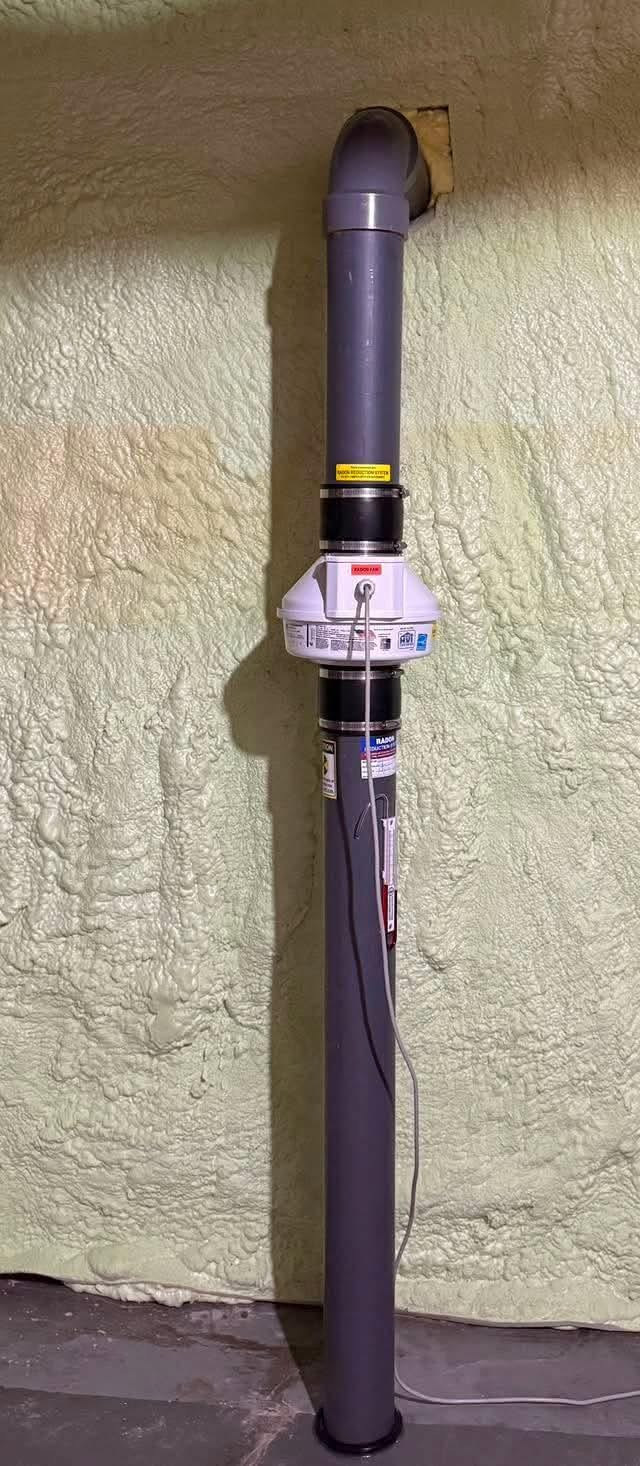
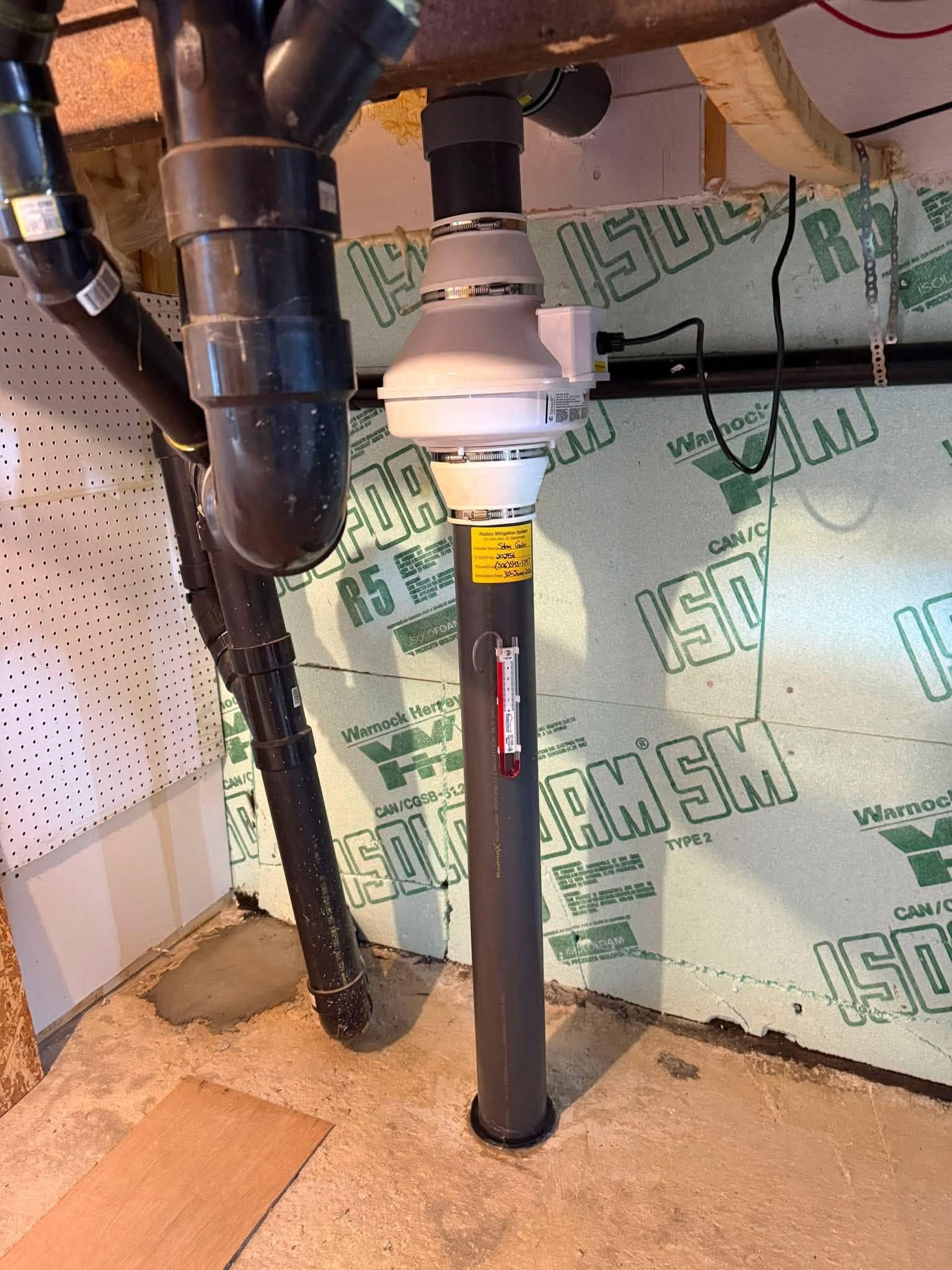
Illustrative installation photos; they are not a substitute for a property-specific design, qualified installation or follow-up radon testing.
There isn't a universal system. The appropriate approach depends on foundation type, access, radon entry pathways and the original test result.
Uses a pipe and fan to draw gas from beneath the foundation and safely exhaust it outside. Often the preferred solution for homes with a slab or basement.
Sealing visible foundation cracks, utility penetrations and sump openings can help, but sealing alone is generally not enough to reliably reduce high radon levels.
Balanced ventilation may help in some cases but is typically less effective than active soil depressurization. Crawl spaces and other foundation designs may need adapted solutions.
These are educational examples, not a site-specific diagnosis or a promise that every method is available from Godin Atlantic. A qualified professional must determine the appropriate design.
Two homes with the same radon reading may require very different work. Rather than advertise an unrealistic flat price, we discuss your property and the scope before providing a personal estimate.
When you contact us, sharing the information below helps start the conversation.
Discuss my propertyDon't have every detail? That's okay. Start with the test result and what you know.
Testing after the work is essential to confirm that indoor radon levels have actually fallen.
A qualified professional performs an initial short-term verification test once the system is running.
Complete a long-term test during the first heating season after installation, preferably in the same location as the original test.
Follow maintenance requirements and retest about every five years for active mitigation systems, or after significant building changes.
It depends on the foundation, access, current radon level, and the system required. That's why mitigation work is discussed and quoted for each property rather than listed at a flat rate.
Yes. Modern systems are often highly effective. Health Canada reports that active soil depressurization can reduce radon by 90% or more in many homes. Your actual result must be verified by testing.
An active soil depressurization system uses a continuously running fan. Follow the installer's guidance for monitoring and maintenance.
Sealing obvious openings can be useful, but it is usually a supporting measure, not a reliable stand-alone solution for elevated levels.
Radon can still enter slab-on-grade or crawl-space homes. The best collection and venting approach depends on the building's design.
Use an initial verification test followed by a long-term radon measurement. A qualified professional can explain the results and any additional adjustments required.
These authoritative sources explain radon reduction and the need for qualified installation and follow-up testing.